
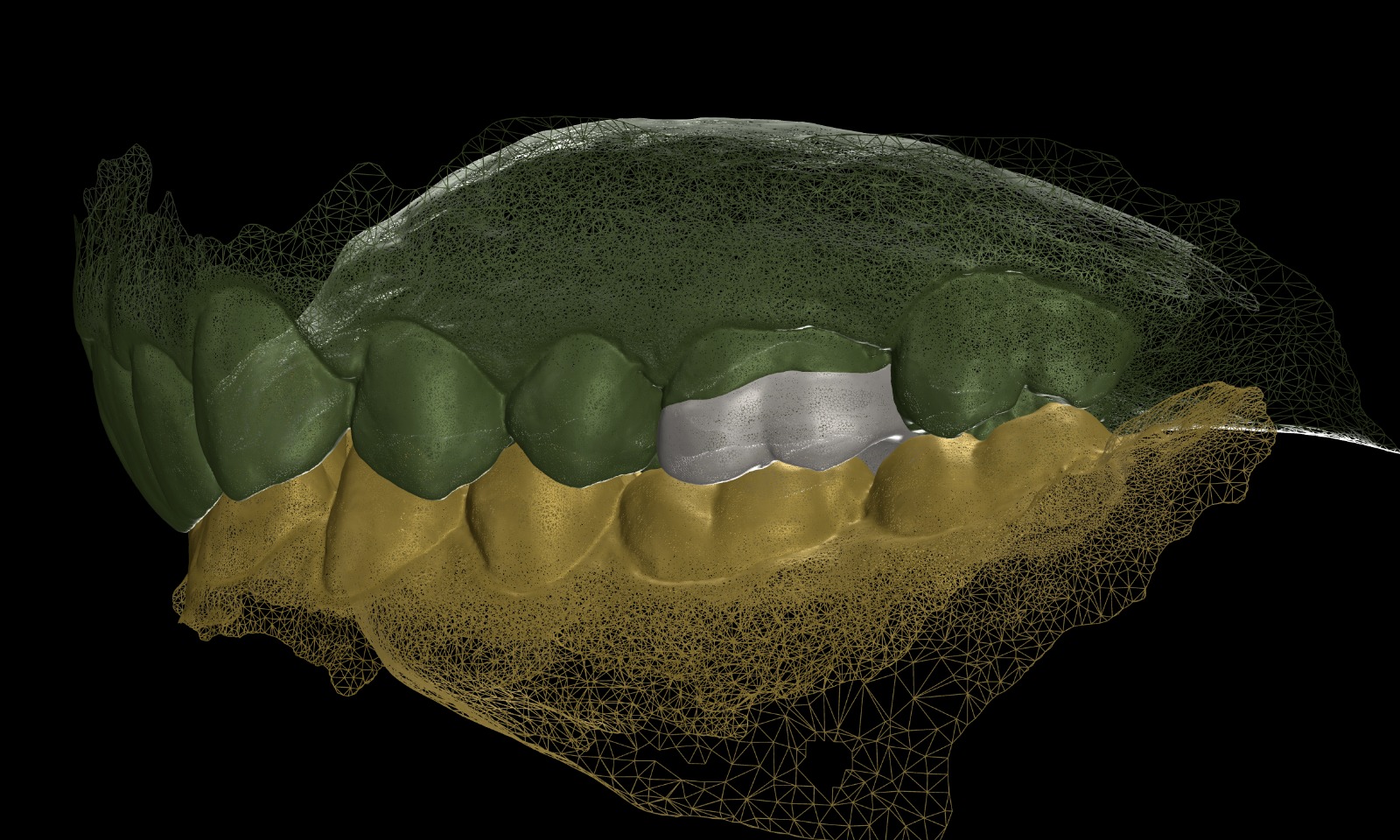

Digital dentistry has fundamentally reshaped how clinicians diagnose, plan, and deliver restorative care. At the centre of this transformation lies the shift from traditional impressions to digital dental impressions, a change that has improved accuracy, streamlined workflows, and enhanced collaboration between dental practices and the dental laboratory.
At Zenith Dental Labs, we operate as a fully digital dental laboratory, built around precision-led workflows, advanced CAD CAM systems, and close clinical communication. This article explores how digital impressions, intraoral scanning, and digital workflows are redefining modern dentistry, and why they are now considered the gold standard for predictable restorative outcomes.
The Limitations of Conventional and Traditional Impressions
For many years, conventional impressions formed the backbone of restorative dentistry. Using physical impression material, clinicians captured tooth morphology, soft tissue contours, and occlusal relationships before sending impressions to the dental laboratory for model fabrication.
While traditional impressions can still produce acceptable results, they are inherently technique-sensitive and prone to several limitations:
- Distortion during setting or removal
- Inaccurate soft tissue capture
- Voids or drag marks in impression material
- Patient discomfort and gag reflex
- Delays caused by shipping and remakes
Even minor inaccuracies at the impression stage can compromise the final restoration. This is particularly critical in cases involving implants, subgingival margins, or complex occlusal schemes.
Digital dentistry addresses these limitations by replacing analogue processes with precise, data-driven solutions.
What Are Digital Dental Impressions?
Digital dental impressions are created using intraoral scanners to capture high-resolution digital scans of the dentition, soft tissue, and occlusion. These scans generate a highly accurate digital file that can be reviewed immediately and transmitted securely to the dental laboratory in real time.
Unlike traditional impressions, digital impressions allow clinicians to:
- Instantly assess scan quality chairside
- Rescan specific areas if required
- Capture detailed soft tissue anatomy
- Submit cases without physical transport
Digital impressions may include full arch scans, localised scanning only, and bite scanning to accurately record occlusal relationships. When combined, these elements form the foundation of a robust digital workflow.
Intraoral Scanning and Soft Tissue Accuracy
One of the most significant advantages of intraoral scanning is the ability to accurately capture soft tissue detail. This is especially important for:
- Implant emergence profiles
- Crown and veneer margin definition
- Aesthetic zone restorations
- Provisionalisation and tissue conditioning
High-quality digital scans allow the dental laboratory to visualise the clinical situation with exceptional clarity. When scanning protocols are followed correctly, such as adequate retraction, moisture control, and margin exposure, digital impressions consistently deliver superior accuracy compared to conventional impressions.
At Zenith, we place strong emphasis on soft tissue accuracy, as it directly influences marginal integrity, aesthetics, and long-term tissue stability.
Digital Impressions and Clinical Predictability
Digital dental impressions improve predictability across a wide range of treatment options. By working from a precise digital file, laboratories can design restorations that are optimised for fit, occlusion, and aesthetics.
Benefits include:
- Reduced remakes and adjustments
- Improved marginal fit
- Accurate occlusal relationships from bite scanning
- Consistent outcomes across multiple cases
For clinicians, this translates into greater confidence and efficiency. For patients, it means fewer appointments, improved comfort, and more reliable results.
CAD CAM and the Fully Digital Workflow
Once a digital impression is received, it enters the CAD CAM phase of the digital workflow. Here, restorations are designed digitally before being manufactured using advanced milling or printing technologies.
This workflow enables:
- Micron-level precision
- Consistent material performance
- Enhanced control over aesthetics and contours
- Efficient collaboration between clinician and laboratory
Because digital files remain fully traceable, adjustments and revisions can be made without repeating the entire impression process. This level of flexibility is not possible with traditional impressions.
Intraoral Scanners and Digital Platforms Supported
Zenith Dental Labs is fully compatible with all major intraoral scanners and digital dentistry platforms, allowing clinicians to work within their preferred systems.
We support scanners from:
- 3Shape
- iTero
- Medit
- Carestream
We also integrate seamlessly with leading digital ecosystems, including:
- DS Core
- Smilecloud
Whether you are submitting full digital impressions, arch scans only, our systems are designed to ensure secure transfer, efficient processing, and clear communication.
Digital Files, Real-Time Communication, and Collaboration
One of the defining features of digital dentistry is real-time collaboration. Digital files can be reviewed immediately by both clinician and technician, allowing for early identification of potential issues and proactive problem-solving.
This collaborative approach improves:
- Treatment planning accuracy
- Communication around margins and occlusion
- Overall case efficiency
At Zenith, we view digital dentistry not simply as a technological upgrade, but as a collaborative philosophy centred on precision and partnership.
Why Patients Benefit From Digital Impressions
From the patient’s perspective, digital impressions offer a significantly improved experience. Intraoral scanning eliminates the discomfort associated with impression trays and impression material, reduces chair time, and minimises the need for repeat appointments.
Patients also benefit from:
- Faster turnaround times
- Improved restoration fit
- More predictable aesthetic outcomes
These advantages support higher patient satisfaction and reinforce the value of modern, technology-driven care.
Zenith Dental Labs: A Boutique Digital Dental Laboratory
Zenith Dental Labs was built from the ground up as a boutique digital dental laboratory. Our workflows are designed to support clinicians who value accuracy, communication, and long-term clinical success.
By working exclusively within a digital workflow, we ensure consistency, traceability, and exceptional restorative outcomes, whether you are restoring a single unit or managing complex implant cases.
Ready to Work Digitally With Zenith Dental Labs?
If you are already using digital dental impressions, or are transitioning from traditional impressions, Zenith offers a structured onboarding process designed to support digitally driven practices.
When you onboard with Zenith, you receive:
- Access to a fully digital dental laboratory
- Compatibility with all major intraoral scanners
- Clear scanning and submission protocols
- Secure digital file transfer
- Dedicated technical communication
Getting started is straightforward. Once onboarded, you can submit cases in real time, collaborate closely with our team, and build a predictable, precision-led workflow from your very first case.
Begin your onboarding today and experience a digital laboratory partnership built around accuracy and collaboration.
FAQs
Frequently asked questions
Everything you need to know about working with Zenith Labs.
Are digital dental impressions more accurate than traditional impressions?
Yes. When captured correctly, digital dental impressions are consistently more accurate than traditional impressions. Intraoral scanning eliminates material distortion and allows immediate verification of margins, soft tissue, and occlusion before submission.
Can I submit partial or section arch scan, or do you require full arch scans?
Both are accepted. While full arch scans and bite scanning are recommended for occlusion-sensitive cases, partial jaw scan submissions may be suitable for certain restorations. Zenith provides guidance during onboarding to ensure appropriate protocols are followed.
How important is soft tissue capture in digital impressions?
Soft tissue accuracy is critical, particularly for implant and aesthetic cases. Accurate soft tissue scans support optimal margin placement, emergence profile design, and long-term tissue stability.
Which scanners and platforms are compatible with Zenith?
Zenith is fully scanner-agnostic and supports all major intraoral scanners and digital platforms. Digital files can be submitted securely through your existing systems without changing your clinical setup.
What support does Zenith provide during onboarding?
Zenith provides structured onboarding support, including scanning protocols, platform setup assistance, and ongoing technical communication to ensure consistency and predictability from your first case onward.