


A dental technician is a General Dental Council (GDC)-registered professional who designs and manufactures dental devices — crowns, bridges, dentures, implant restorations, and orthodontic and occlusal appliances — to a prescription from a dentist or clinical dental technician.¹ They are the people behind the restoration: the dentist prepares the tooth and takes the record, and the technician turns that record into the physical device that goes back into the mouth. This guide explains what a dental technician does, how the role differs from a clinical dental technician and a dental technologist, how UK registration works, and how the job has changed in the digital era.
What a dental technician does
The core of the role is fabrication to prescription. Working from an impression or an intraoral scan and the dentist’s written prescription, a dental technician builds the device to fit a specific patient’s anatomy, occlusion and aesthetic requirements. The output spans most of restorative and prosthetic dentistry:
- Crowns and bridges in ceramic, zirconia and metal-ceramic
- Implant restorations, including custom abutments and full-arch prostheses
- Complete and partial dentures, including cobalt-chrome frameworks
- Orthodontic appliances, retainers and occlusal splints
In the UK, dental technicians can also repair dentures directly for members of the public, but they make all other devices only to a dentist’s or clinical dental technician’s prescription.¹² The technician’s judgement matters enormously here: margin fit, emergence profile, shade and occlusion are all decided at the bench, which is why the technician–dentist relationship is a clinical partnership rather than a supply transaction.
Dental technician, clinical dental technician, or dental technologist?
The titles are easy to confuse, so it is worth separating them:
- Dental technician / dental technologist — makes dental devices to a prescription and repairs dentures direct to the public. “Dental technologist” is essentially an alternative title for the same registrant group.¹
- Clinical dental technician (CDT) — a registered professional who can additionally provide removable appliances (dentures) directly to edentulous patients under Direct Access, and to dentate patients on referral or prescription from a dentist or an oral and maxillofacial surgeon.³ A CDT has extended clinical training beyond that of a dental technician.
The practical distinction: a dental technician works from the prescription at the bench, while a clinical dental technician can also see denture patients clinically within a defined scope.
Registration and regulation in the UK
Dental technician is a protected title. To describe yourself as a dental technician or dental technologist in the UK, you must be registered with the GDC — the practice of dentistry is a protected function restricted to registered professionals.¹ Registration means the technician is qualified, accountable to the GDC’s standards, and required to work within the GDC’s Scope of Practice: performing only the tasks they are trained, competent and indemnified to carry out.⁴
For a referring dentist, that registration is a meaningful assurance — you are prescribing to a regulated professional held to defined standards, not an unregulated workshop.
How to become a dental technician
Entry is through a recognised qualification in dental technology that leads to GDC registration — typically a BTEC, foundation degree or BSc in dental technology, and increasingly through approved apprenticeship routes. Registered dental technicians can then study further for a Diploma in Clinical Dental Technology to qualify and register as a clinical dental technician.³ Throughout, the GDC’s registration and continuing professional development requirements apply.
The technician’s role in modern digital dentistry
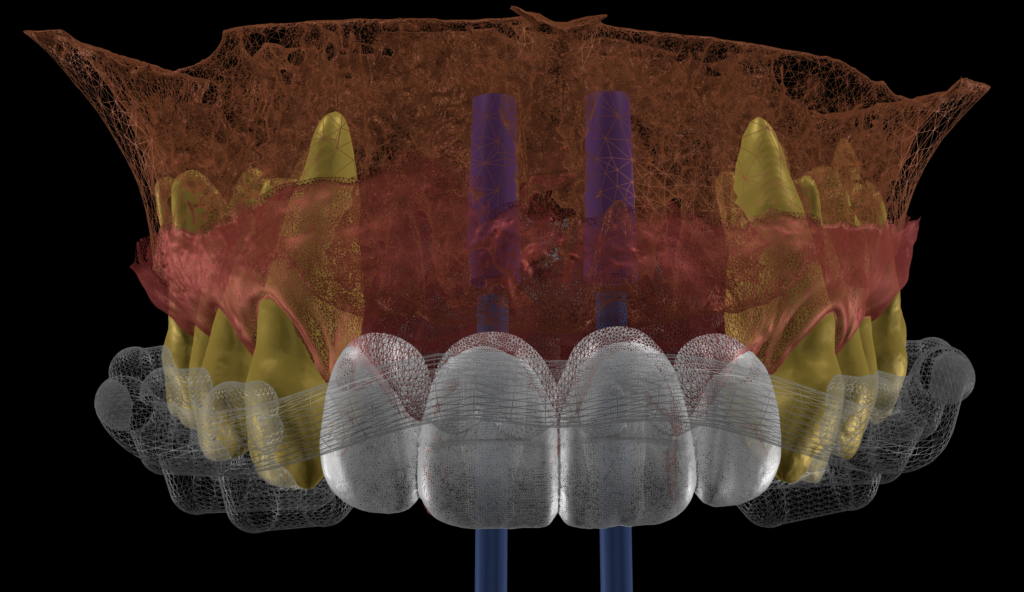
The craft has not disappeared — it has moved partly onto the screen. A modern dental technician still owns the aesthetic and functional decisions, but the tools are now CAD design software, intraoral scan data, multi-axis milling, and 3D printing rather than only wax, plaster and hand-layering. Digital workflows have raised the ceiling on precision and repeatability, and they have changed how technicians and clinicians collaborate — a design can be reviewed and approved on screen before anything is manufactured, which is far harder to do with an analogue wax-up.
This is where the technician’s skill compounds with technology: a well-captured digital impression plus an experienced technician’s judgement produces a restoration that seats cleanly, rather than one that needs adjusting at the chair.
How Zenith works
Zenith Dental Labs was founded by a practising dentist, which shapes how our technicians work: every case is approached with both the chairside and the bench in mind, so design decisions reflect how a restoration has to behave in the mouth, not only how it mills. Our technicians work within a fully digital workflow — CAD/CAM, multi-axis milling and 3D printing — and return a design preview within 24–48 hours for the dentist’s approval, backed by a 2% remake rate against an 8–12% industry average. You can see the range of work our technicians produce, and read more about our dentist-founded approach.
If you would like to work with our technical team on a case, get in touch.
FAQs
Frequently asked questions
Everything you need to know about working with Zenith Labs.
What is a dental technician?
A dental technician is a GDC-registered professional who designs and makes dental devices — crowns, bridges, dentures, implant restorations and appliances — to a dentist’s prescription.¹ They can also repair dentures directly for the public, but make all other devices to prescription.
What is the difference between a dental technician and a dental technologist?
They are essentially the same registrant group — “dental technologist” is an alternative title for a dental technician, both registered with the GDC to make dental devices to prescription.¹
What is the difference between a dental technician and a clinical dental technician?
A dental technician works from the prescription at the bench. A clinical dental technician (CDT) has extended training and can also provide dentures directly to edentulous patients under Direct Access, and to dentate patients on referral or prescription.³
Are UK dental technicians registered?
Yes. Dental technician is a protected title, and you must be registered with the GDC to work or describe yourself as one in the UK, working within the GDC’s Scope of Practice.¹⁴
How do you become a dental technician?
Through a recognised dental technology qualification — a BTEC, foundation degree, BSc, or approved apprenticeship — that leads to GDC registration. Registered technicians can study further to qualify as a clinical dental technician.³
Sources
- General Dental Council — “Employment and registration” (registration requirement; protected title; dental technician role) — https://www.gdc-uk.org/information-standards-guidance/supporting-the-dental-team/employment-and-registration
- GOV.UK Regulated Professions Register — “Dental Technician” (makes devices to prescription; repairs dentures direct to public) — https://www.regulated-professions.service.gov.uk/professions/dental-technician
- GOV.UK Regulated Professions Register — “Clinical Dental Technician” (dentures direct to edentulous patients under Direct Access; referral for dentate) — https://www.regulated-professions.service.gov.uk/professions/clinical-dental-technician
- General Dental Council — “Scope of Practice” guidance (perform only tasks trained, competent and indemnified for) — https://www.gdc-uk.org/information-standards-guidance/scope-of-practice